








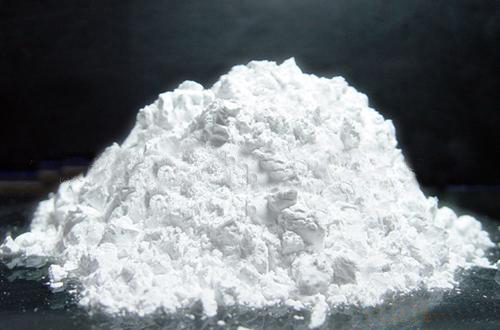
Quartz sand is a nonmetal substance while a hard, wearable and chemically stable silicate mineral with 7 hardness degree, mainly consisting of SiO2, ivory or translucent. It is an important raw material for industry, not a chemical hazard, widely applied to glasses, casting, ceramics, as well as fire-resistant material, smelting of ferro silicon, flux, metallurgy, construction, chemicals, plastic, rubber, abrasive, etc.
Quartz sand is mainly used as raw material for glass industry and ceramic industry, and the fine quartz sand can be used as an abrasive for grinding glasses etc.
Ordinary Quartz Sand
Ordinary quartz sand, that is, SiO2≥90—99%, Fe2O3≤0.06—0.02%, refractoriness:
Refined Quartz Sand
Also called acid washed quartz sand, SiO2≥99—99.5% Fe2O3≤0.005%, which is made of high-grade natural quartz through processing of selection and machining. Range of particle size: 1
Refined quartz sand, SiO2≥99—99.5% Fe2O3≤0.02—0.015%, is made of selected high-grade ore through a complicated process of machining. The particle size varies from 5 to 480 meshes, may be leveled as required, white or crystal. Main applications: High-grade glass, glassworks, fire-resistant material, smelting of minerals, precision casting, abrasive for wheel, etc. (mm is an abbreviation for millimeter)
High Purity Quartz Sand
SiO2≥99.5—99.9% Fe2O3≤0.001%, is made of natural quartz through a process of selection and machining. Range of particle size: 1
Fused Quartz
Chemical composition: SiO2: 99.9-99.95%, Fe2O3: 5PPM-25PPM, Li2O: 1-2PPM. Al2O3 20-30PPM.
K2O: 20-25PPM, Na2O: 10-20PPM (PPM is an abbreviation for parts per million).
Physical property:
Transparent, particle-shaped or white power
Relative density: 2.21
Mohs hardness: 7.0
PH value: 6.0